


Tag with Ryan
3.814.73K Reviews
App Specs
- Version
- 1.37.0
- Updated On
- License
- Free
- Downloads
- 10,000,000+
- Developer
- WildWorks
- Categories
- Casual
- Platform
- Android
Screenshots
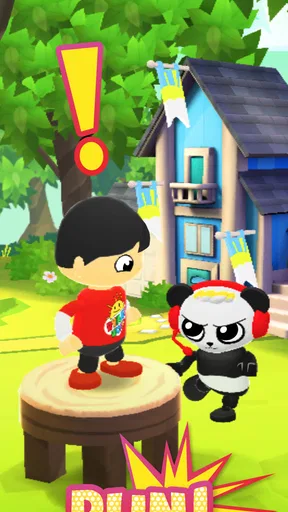
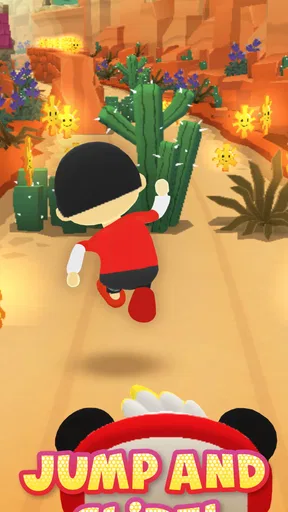

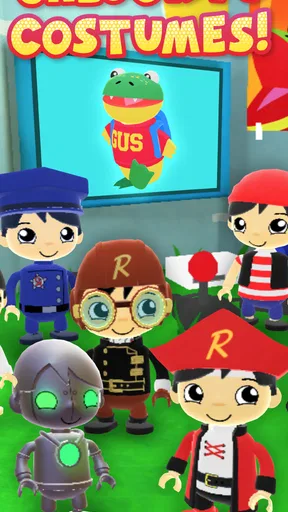

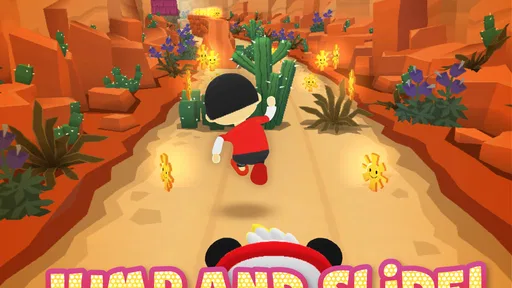

 Analysis by AppCompare
Tag with Ryan is a casual game built around a very simple idea: step into the role of Ryan from Ryan’s World and see how long you can keep going. I spent time with it expecting a quick, child-friendly distraction, and that is exactly where it makes the most sense. It is easy to understand, bright to look at, and designed to deliver short bursts of play rather than a deep campaign or a complicated challenge.
That simplicity is both its appeal and its main limitation. I could start playing without studying instructions, which makes it suitable for younger players and for anyone who wants something immediate. At the same time, players looking for a large adventure, a detailed progression system, or a game that keeps revealing new layers may find the experience lightweight. My overall impression is that this is best treated as a cheerful pick-up-and-play title, not as a substitute for a larger platformer or a more demanding endless game.
A bright first impression built for quick play
The presentation immediately signals who the game is for. The visual direction uses the recognizable world associated with Ryan’s World, with a colorful, playful look that feels more like an animated children’s show than a serious action game. That choice gives the game a clear identity. I never felt that it was trying to imitate a realistic runner or appeal to an older audience through complexity; it stays committed to a friendly, accessible mood.
The basic premise is communicated quickly. You become Ryan, begin the run, and focus on tagging while trying to continue. There is no need to learn a long backstory before the activity starts. For a child picking up a phone or tablet, that low entry barrier matters. For a parent handing over the device during a short wait, it also means less time spent explaining what to do.
WildWorks is the developer behind the game, and the title sits firmly in the casual category. It is free to start, with optional purchases priced from $0.99 to $49.99 per item. That range is worth keeping in mind before giving the game to a child, because the free download does not mean every optional item is included. I would set expectations clearly and use the device’s purchase controls when a younger player is involved.
The game is rated for Everyone, which matches its approachable tone. It launched on December 17, 2018, and the current version is 1.37.0, supporting devices running Android 7.0 or later. On the Android store, it has passed 10 million installs, while its average rating is 3.8 from over 100 thousand ratings. Those figures suggest that it has reached a substantial audience, although the rating also tells me that broad recognition does not automatically make it the perfect casual game for every player.
What the opening minutes reveal
My first useful observation was that the game works best when I stop expecting a long session. It has the feel of something to open for a few minutes, play until the run ends, and put away. That rhythm suits a child who wants a familiar character without committing to a complex level-based adventure. It also suits adults who want a harmless, uncomplicated diversion.
Worth Reading Before You Choose

EA SPORTS FC Mobile 26 Is a Bigger Football Game, but It Takes Time

Flipboard Shows What News Apps Must Do Beyond the Feed

Switching to Android Auto Means Rethinking Your Driving Routine

Google Calendar Makes a Crowded Week Easier to Manage

Ludo King Makes the Most of the Minutes Between Plans

Baby Panda World Brings Quick Play to Modern Phones, but Its Game Library Feels Busy
The recognizable character does much of the early work. A player who already knows Ryan’s World has an immediate reason to try the game, while someone unfamiliar with the brand may see the character design as colorful but not especially meaningful. This is an important distinction: the game’s strongest emotional hook comes from its licensed identity, not from an elaborate original setting that gradually earns your attachment.
I also found that the straightforward setup makes the title easier to share between players. A sibling can watch a run, understand what is happening, and take a turn without needing a tutorial session. That makes it a reasonable choice for casual family use. It is less convincing for someone who wants a personal long-term challenge with carefully tuned difficulty and a sense of mastery built over many evenings.
A world shaped by color, character, and readable action
The art direction keeps the playable space visually approachable. Strong colors and familiar character presentation help separate the important action from the surrounding decoration. In a game centered on quick reactions, that readability is more valuable than visual detail for its own sake. I could understand the tone at a glance: this is playful, energetic, and aimed at keeping the screen inviting rather than intimidating.
The setting also supports the game’s central fantasy. You are not controlling an anonymous figure in a generic environment; you are playing as Ryan, which gives the simple act of tagging a recognizable context. The world language is therefore built from character branding, bright presentation, and a sense of motion. It does not need a large amount of text or exposition to communicate what kind of experience it wants to be.
One subtle strength is that the visuals do not ask the player to admire them for long. They are functional as well as decorative. A younger player can focus on the immediate action instead of trying to interpret a dense interface. That is a good fit for an Everyone-rated game, especially when the player may be more interested in seeing Ryan move than in understanding a complicated menu structure.
The trade-off is that the same visual clarity can make the game feel less distinctive over time. Bright colors and a familiar character create a good first impression, but they do not automatically provide variety. If your idea of a casual game includes discovering new environments, collecting a large range of unusual characters, or seeing the art style evolve substantially, this title may feel narrower than expected.
Why the setting works better for short sessions
I think the setting is most successful when the game is treated like an interactive extension of the show’s playful energy. A child can recognize the mood immediately, and the visual language helps maintain attention without requiring a complicated plot. That makes it useful during a short break or as a quick change of pace after watching related content.
It is less effective as a world to explore slowly. The game’s appeal comes from participating in a focused activity, not from wandering through a richly developed fictional place. Players who prefer exploration-heavy mobile games should look elsewhere. A conventional platform adventure with separate stages would offer more room for discovery, while a traditional endless runner might provide a stronger sense of speed and route-based challenge.
There is also a practical viewing tip here: the game is easier to follow on a tablet or a phone held at a comfortable distance, where the colorful action remains clear without forcing the player to stare closely. That can matter for younger users. I would still keep sessions sensible, because an accessible visual style makes it easy to continue playing longer than originally planned.
Sound and rhythm give the simple mechanics their mood
The audio design plays an important supporting role because the mechanics themselves are uncomplicated. Sound helps turn a basic sequence of movement and tagging into something lively. The overall mood feels energetic rather than tense, which fits the character and the intended audience. I did not approach each attempt with the pressure associated with a competitive action game; the presentation encourages playful repetition.
That lighter mood is useful for children who may be discouraged by harsh failure screens or an overly serious atmosphere. The game can still create a reason to try again, but the tone does not make every mistake feel dramatic. In my experience, that makes it easier to hand the game to a younger player who wants action without frustration becoming the main event.
Rhythm is also important in deciding how long a session feels. Because the activity is easy to enter, the player can settle into a repeated pattern quickly. A short run can feel complete, while a longer session depends on whether the player enjoys repeating that pattern and trying to improve. This is where the title differs from a story-driven casual game: its momentum comes from the next attempt, not from a new scene or plot development.
I would recommend playing with sound available when possible, because the audio contributes to the sense of movement and makes the presentation feel more complete. However, this is not the kind of game that becomes unusable in a quiet setting. If I were using it in a waiting room or during travel, I could keep the volume low and still understand the action. That flexibility is valuable for a game designed around brief everyday sessions.
The pacing is friendly, but not endlessly surprising
The pacing succeeds when the player wants a compact loop. Start, react, tag, continue, and try again: the structure is easy to grasp. It avoids the slow opening that can make some mobile games feel like they are delaying the actual play. For a child, that immediacy is a real advantage; for an adult, it means the game respects a few spare minutes.
The downside is repetition. A player who needs constant changes in objectives may feel that the rhythm settles too quickly. The cheerful presentation can soften that repetition, but it cannot remove it. I would not choose this as my main game if I wanted a steady stream of new mechanics, increasingly elaborate stages, or strategic decision-making.
A useful way to judge the pacing is to ask what kind of attention the player has available. If the answer is “I want a quick activity that I can stop easily,” the structure fits. If the answer is “I want a game that will occupy me deeply for an hour,” a more substantial casual title would probably be a better match.
Where the mechanics fit, and where they fall short
The mechanical design is intentionally approachable. The game does not appear to be built around complicated controls or a large collection of systems competing for attention. That makes it suitable for players who are new to mobile games, younger children, and fans who mainly want to interact with Ryan rather than master an elaborate ruleset.
That accessibility should not be confused with unlimited depth. A simple control scheme can be satisfying when the challenge is carefully balanced, but it can also expose repetition quickly. I found the game more enjoyable when I treated each run as a small personal challenge instead of expecting a long progression path. The question is not whether the mechanics are complex; they are not. The question is whether the central action remains enjoyable after the novelty of the character wears off.
One non-obvious advantage of the focused design is that it reduces the number of ways a child can become confused. There are fewer layers to explain, fewer menus to navigate, and less chance that the player will lose the main objective. This makes it a good candidate for independent play after a brief demonstration. I would show a child the basic action once, then let them discover the timing through short attempts.
Another practical strength is its suitability for shared devices. Because the game is easy to understand, different family members can take turns without needing separate tutorials. A parent can also watch a child play and quickly tell whether the child understands the objective. That is more useful than it may sound: games with complex progression often require adults to manage menus, accounts, or explanations before the child can enjoy the actual activity.
The main friction is the relationship between free access and optional purchases. Since items can cost as much as $49.99 individually, I would not leave a young player to explore purchasing screens without supervision. The game may be free to download, but families should treat the purchase element as part of the setup conversation. If you want a completely purchase-free experience, a paid game with everything unlocked from the beginning may be more comfortable.
Who should play it and who should skip it
I would recommend Tag with Ryan to children who already enjoy Ryan’s World, families looking for an easy casual game, and players who prefer short rounds over long campaigns. It is particularly suitable when the goal is quick entertainment with a familiar character and a bright, low-pressure mood.
I would be more cautious about recommending it to older players who do not know the character, or to anyone seeking a demanding reflex game. A standard endless runner may offer a more satisfying sense of speed, while a platform game may provide better level design and exploration. A puzzle game would be a stronger choice for someone who wants to think through each move rather than repeat an action-focused loop.
The title is also not my first choice for a child who becomes frustrated by repetition or who needs frequent changes in goals. Even with a friendly presentation, a focused casual loop can feel narrow. In that situation, rotating between this game and a creative or puzzle-based alternative would work better than expecting it to hold attention indefinitely.
How it fits into an ordinary day
Imagine a child waiting while a parent finishes an appointment. There may be only a few minutes available, and the child does not want to learn a new story or navigate a complicated map. This is where the game makes practical sense: open it, begin a run, play until the natural stopping point, and hand the device back without leaving a long mission unfinished.
Another realistic use is a shared family tablet after school. One child can play while another watches, then they can switch without needing to remember a complicated inventory or campaign. The recognizable character gives them something to talk about, while the straightforward action makes turn-taking simple. I would still supervise purchases and decide in advance how long the session should last.
For travel, the game’s short-session structure is more convenient than a story game that depends on remembering a plot. It can fill a small gap without demanding full concentration for a long period. The bright art and upbeat mood also make it feel more suitable for casual family use than a darker or more intense action title.
On the other hand, if I were planning a long flight and wanted one game to carry the entire journey, I would choose something with more variety. This title is better as one option in a rotation. Pairing it with a puzzle game, a creative app, or a longer adventure prevents the repeated action from becoming tiring.
My atmosphere verdict after looking past the character
The strongest part of Tag with Ryan is the coherence between its character choice, colorful art, upbeat sound, and compact pacing. Nothing about the presentation suggests that it wants to be a serious simulation or a complex adventure. The game knows that its job is to make a familiar children’s character playable in a quick, accessible format, and most of its design decisions support that goal.
The mechanics remain central, but the mood makes them easier to enjoy. Color gives the action a welcoming frame, sound adds energy, and the short rhythm keeps the game approachable. That combination is more successful for younger players and fans of Ryan’s World than for people judging the game purely by mechanical depth.
My advice is to download it with the right expectations. Think of it as a free casual game for brief sessions, not as a full-scale mobile adventure. Check that the device meets the Android 7.0 requirement, decide how optional purchases will be handled, and try it first during a short play window rather than assuming it will become a long-term favorite.
After playing it, I see a game that earns its place through accessibility and atmosphere rather than complexity. It is a friendly choice for a child who wants to play as Ryan, and a reasonable family game when quick, understandable action matters most. If you want a bright, character-led distraction that starts quickly, it is worth trying; if you want deep progression, exploration, or demanding mechanics, choose a different casual game.
For me, that is the fairest recommendation. Tag with Ryan does not need to be more complicated to serve its audience, but its simplicity means the audience is specific. Fans of the character and families seeking an easy shared activity will get the clearest value from it. Everyone else should decide based on whether the cheerful mood and repeatable action are enough to keep them coming back.
Pros
- Simple tagging gameplay is easy for young children to understand.
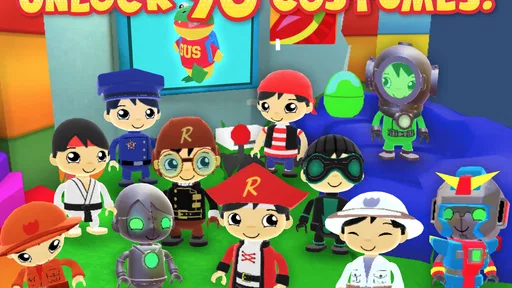
- Bright visuals and Ryan-themed characters make it appealing to fans.
- Short rounds suit quick play sessions and limited attention spans.
- Touch controls are generally accessible for younger players.
- Familiar characters can encourage children to try the game.
Cons
- Gameplay may feel repetitive after several sessions.
- Strong branding may appeal mainly to existing Ryan fans.
- Limited challenge can make it less engaging for older children.
- May include ads or in-app purchases depending on the version.
- Requires parental guidance to manage screen time and purchases.
FAQs for Tag with Ryan
What is Tag with Ryan, and how does the game work?
Tag with Ryan is a colorful endless-running game inspired by the Ryan’s World entertainment brand. Players guide Ryan through bright environments, collect coins and useful items, avoid obstacles, and try to achieve the highest possible score. The controls are designed to be simple, usually relying on swipes and taps, making the game accessible for younger children while still offering quick, replayable challenges.
Is Tag with Ryan suitable for children?
The game is generally aimed at children and fans of Ryan’s World, with cartoon-style graphics, familiar characters, and straightforward gameplay. However, parents should still review the game’s content and settings before allowing younger children to play. Depending on the version and device, the app may include advertisements, optional purchases, or links to external content, so parental supervision is recommended.
Does Tag with Ryan require an internet connection to play?
Tag with Ryan may allow some core gameplay to work without a continuous internet connection, particularly after the game has been installed and its necessary files have loaded. Nevertheless, an internet connection can be required for advertisements, updates, promotional content, analytics, or certain online features. Availability may vary by device and app version, so offline performance should be tested after installation.
Are there in-app purchases or advertisements in Tag with Ryan?
Users should check the current store listing and the game’s settings because monetization can change through updates or differ between platforms and regions. Tag with Ryan may contain advertisements or optional purchases connected with extra content, items, or an ad-free experience. Parents are advised to activate purchase restrictions on the device and discuss advertising with children before starting the game.
What devices are compatible with Tag with Ryan?
Compatibility depends on the operating system, device model, available storage, and the minimum version supported by the current release. The safest approach is to open the official Google Play or Apple App Store listing and confirm the requirements before downloading. Keeping the device’s operating system updated can also improve stability, while older phones or tablets may experience slower performance.


